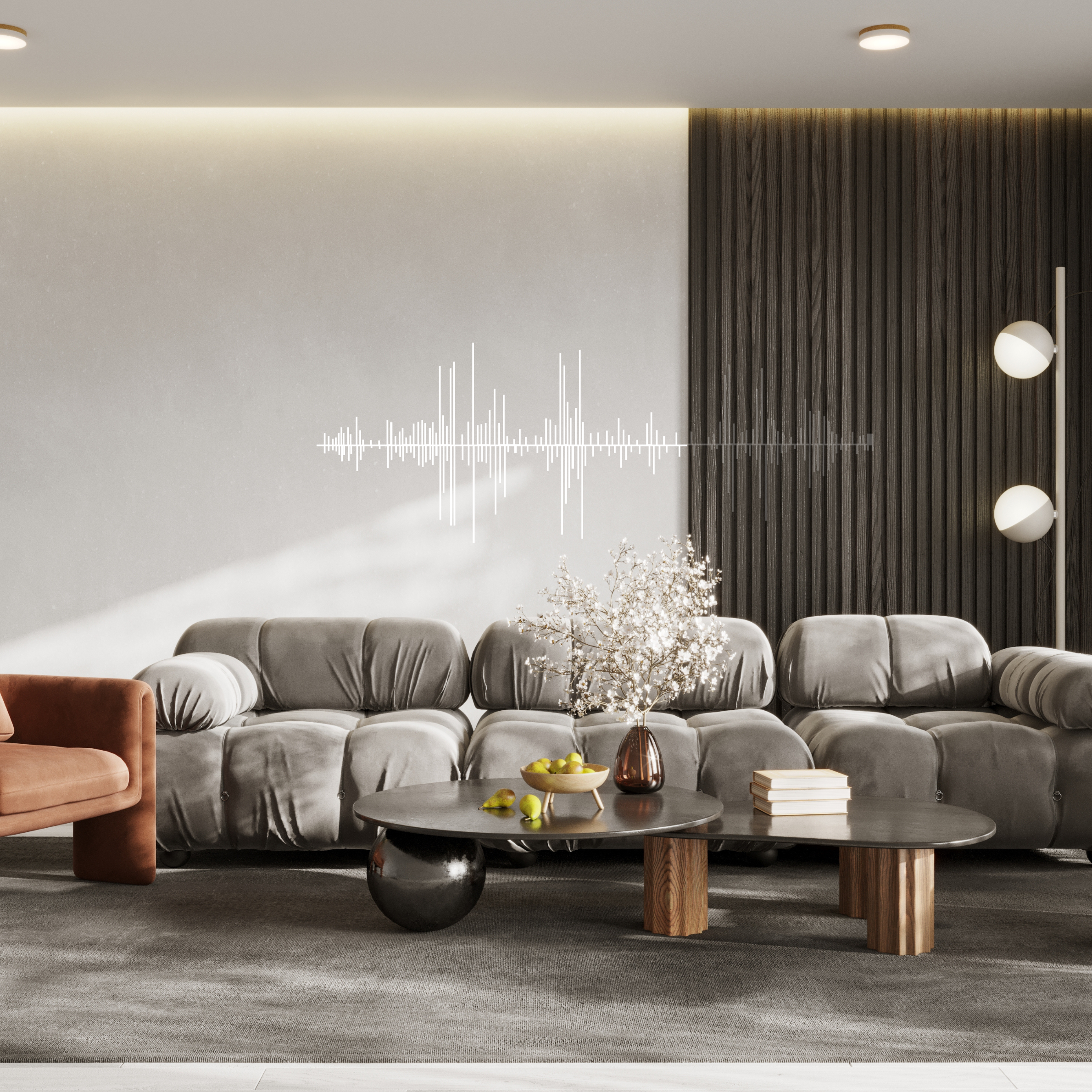
Shaping Spaces Beyond the Surface
The way a space sounds is just as important as how it looks, yet it’s often overlooked.
You can have beautifully considered interiors, but if sound isn’t controlled, the experience falls short.
Echo, background noise, and harsh reflections can quickly turn a well‑designed space into one that feels unsettled and difficult to enjoy.
Great spaces don’t just look good. They feel calm, balanced, and effortless to spend time in. That’s the role of considered acoustics.
Understanding Acoustics
At its core, acoustics is about how sound behaves within a space.
Sound travels in waves, reflecting off surfaces it encounters. Hard materials like glass, concrete, and plasterboard bounce sound back into the room, while softer, more porous materials absorb it.
In modern interiors where open layouts and hard finishes are common, sound has nowhere to go. It builds, overlaps, and lingers, creating echo and reducing clarity.
Why It Matters
Poor acoustics aren’t always immediately visible, but they’re instantly felt.
Conversations become harder to follow. Background noise competes for attention. Spaces that should feel relaxing or productive instead feel tiring over time.
This is especially noticeable in open‑plan homes, workplaces, and shared environments where sound is constantly in motion.
A More Considered Approach to Sound
Acoustic panels offer a refined solution by shaping how sound moves through a space.
Rather than allowing sound to reflect freely, they introduce control through two key effects:
Absorption
Specialised materials capture sound energy, reducing echo and softening the overall environment.
Diffusion
Textured surfaces disperse sound reflections, creating a more even and natural sound experience.
The result is not silence, but balance, where sound feels intentional and comfortable.
Measuring Performance
Acoustic performance is typically measured using the Noise Reduction Coefficient (NRC).
This rating indicates how much sound a material absorbs on a scale from 0 to 1. Sonik Wall Linings have an NRC rating of 0.65, meaning they absorb approximately 65% of incoming sound energy — a level well suited to managing everyday noise and improving clarity within interior spaces.
Where It Makes the Difference
The impact of acoustic treatment is most noticeable in spaces where sound tends to build:
- Open‑plan living areas
- Workplaces and meeting rooms
- Retail and hospitality environments
- Media rooms and shared spaces
In these settings, improving acoustics doesn’t require structural change — but it can completely transform how the space feels to use.
Designing for How a Space Feels
Acoustics should never be an afterthought.
When considered alongside materials, lighting, and layout, it elevates the entire experience of a space — supporting clearer communication, better focus, and a greater sense of ease.
Because the most successful interiors aren’t just seen.
They’re experienced.
Share:
Sonik SlatWall Installation Guide